
The Warm Zone Is Full Of People
Who Have Never Met You
Doctrine walks you down a corridor officers cleared ninety seconds ago, escorted by a team you were introduced to in a parking lot. Every one of them is looking for someone who does not belong. Nothing in that doctrine says how they are supposed to know that you are the medic.
Body Armor Is In The Doctrine.
Being Recognized Is Not.
Doctrine tells you how to survive the room. It does not tell anyone in that room who you are.
The Rescue Task Force model (developed by Arlington County Fire Department and now written into response plans across the country) is a second wave of law enforcement escorting civilian EMS into the warm zone, so that care starts before the scene is fully secure.
It is a good model. It is specific about a great deal: which zone you work in, who escorts you, that the escort stays put rather than wandering off, that members should have Kevlar helmets and body armor. It tells you how to survive the room.
What it does not tell you, and what none of the source documents we could find tell you, is how the medic is supposed to be marked. You are moving through a corridor with officers who are still clearing it, in whatever you had on when the tones dropped, and the only thing separating you from the person they are looking for is that somebody remembers your face.
That is the gap. It is not a gap in anyone’s training. It is a gap in what you are wearing.

Where The Problem Actually Lives
The zones are the standard EMS framing for a hostile event. Identification stops mattering the moment you reach the third one, which is exactly why it matters so much in the second.
Hot Zone
An active threat is present. Care is limited to stopping the bleed (direct pressure and tourniquets) then moving the casualty out.
Warm Zone
Cleared or isolated, but the risk has not gone. MARCH interventions happen here, and the casualty collection point sits here. This is where you are unidentified.
Cold Zone
Comprehensive care, standard protocols, formal triage. Everyone here knows who everyone is. Nobody needs a banner.
The Escort
A second wave of officers takes you in and stays with you while you work. They met you minutes ago. The rest of the building never did.
Zone definitions and the Rescue Task Force description above follow the published EMS literature. Sources are listed at the foot of this page.
One Word, Three Colorways
MEDICAL reads front and back, from any angle, on a banner that lives in a belt pouch until the second you need it. The word never changes. The color is the part you choose.
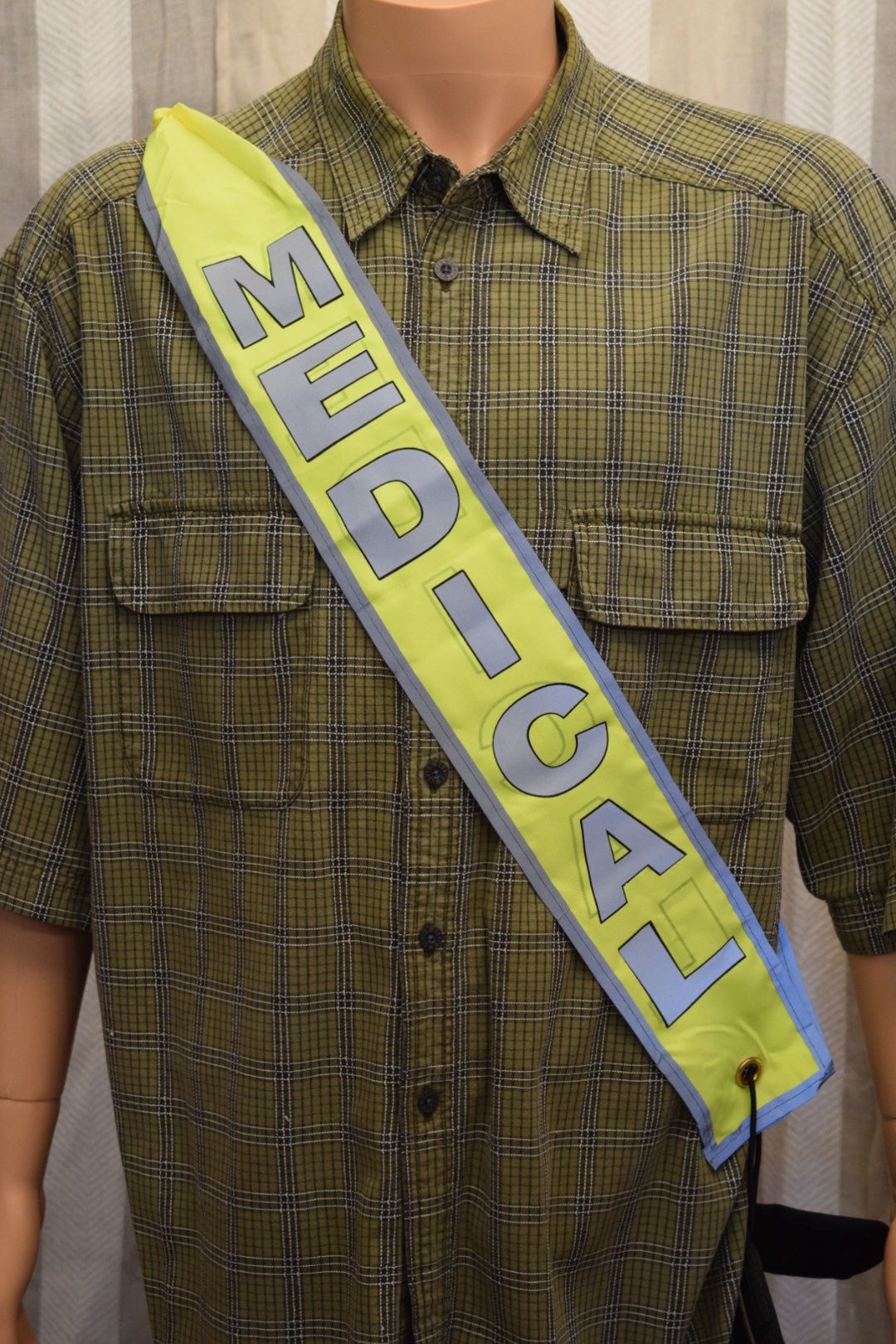
Hi-Vis
The house color, and the one most services already own something in. Highest daylight conspicuity of the three.
- Face
- Front & Back
- Deploy
- One-handed
- Carry
- Belt pouch
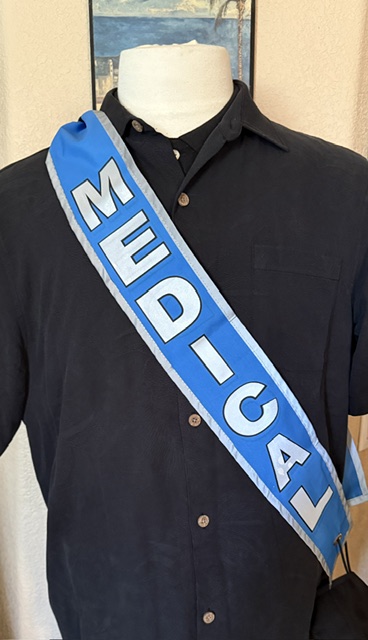
Blue
Reads as medical rather than as scene marking, and separates you from the hi-vis a fire or traffic element may already be wearing.
- Face
- Front & Back
- Deploy
- One-handed
- Carry
- Belt pouch

Red
The color the public already reads as medical, and the one most often asked for by services whose apparatus and kit are already red.
- Face
- Front & Back
- Deploy
- One-handed
- Carry
- Belt pouch
“Which color performs best at night, or in headlights?”
We do not publish a number for that, because we have not measured it. Plenty of people would quote you one anyway.
What we will do is talk it through: your lighting, what your apparatus and your escorting units already wear, and what you are trying to separate yourself from. Call 1-775-250-5523 and ask for the honest version.
Outfitting A Service, Not Just A Bag
Medical orders rarely come from one person. They come from a service, a hospital system or a county, and they go through a purchasing office. That route is already open.
Tell Us The Service
Colorway, quantity and carry option. Mixed orders are normal. A tactical element and a transport crew rarely want the same thing.
Get A Written Quote
Bulk pricing in writing, with the W‑9 and the CAGE and UEI that a purchasing office asks for before it can raise a requisition.
Purchase Order
We accept agency and institutional purchase orders. Federal, state and municipal buyers are already on the books, multiple federal agencies among them.
Ship And Vet
Multi-address shipping so each station receives its own. Every order is vetted before anything leaves, including yours.
From The Law Enforcement Experts
DSM’s reference base today is law enforcement, so that is whose words are below. We are not going to put a quote in a paramedic’s mouth to fill a gap. If your service runs these and would say something on the record, we would like to hear from you.
I purchased them and have them in place with my lieutenants, detectives, school resource officer, myself and others ready for special events.Chief William L. HarveyEphrata Police Department
It's Life Insurance on your hip!Ken HackathornPolice / Military Tactics Instructor & Gunwriter
Not a single plain clothed officer was engaged whatsoever, even in a low light situation.CyrilLE Training · McKinney TX PD active shooter refresher
You Are Going In Either Way.
Go in wearing the one word that answers the question every officer in that corridor is asking.
Sources. Zone definitions and MARCH interventions: “EMS Zones of Care”, StatPearls, National Library of Medicine. Rescue Task Force origin, composition and escort role: “Active Shooter Incidents: The Rescue Task Force Concept”, Domestic Preparedness. Neither source specifies a marking or identification standard for warm-zone medical personnel.